EVENT RECAP: Geopolitical Risks and the Future of Multilateral Order

Geopolitical Risks and the Future of Multilateral Order
with Lukas Haynes and Mallory Stewart
Monday, March 23, 2026
Moderated by Susan Elliott
Written by Robert Mugno
On March 23rd, 2026, the National Committee on American Foreign Policy (NCAFP), in partnership with the Ralph Bunche Institute for International Studies, hosted a panel discussion at the CUNY Graduate Center in New York City on geopolitical risks and the future of the multilateral order. The evening brought together two seasoned practitioners for a conversation that was equal parts historical reckoning and policy analysis.
Dr. Lukas Haynes, a visiting scholar at the Ralph Bunche Institute and author of Peace Through Power: FDR’s Military Leaders and the Pragmatism of the UN Charter, opened by reframing a question that has become newly urgent: what was the UN intended to accomplish? His response challenged idealist narratives. The UN’s founding was a product of hard bargaining among realists, driven by three imperatives that remain as relevant today as they were in 1945: sustaining American international engagement, keeping global trade routes open, and preventing another catastrophic great power war. The same political forces that complicated those original negotiations, Haynes argued, are once again shaping the debate.
The Honorable Mallory Stewart, CEO of The Council on Strategic Risks and former Assistant Secretary of State for Arms Control, Deterrence, and Stability, brought the conversation into the present. With New START expired and strategic competition intensifying across multiple domains, she raised questions about how states manage instability without the guardrails that previous generations established and maintained. She was direct about the risks of “engaging the sake of engagement,” and of the dangers of losing institutional memory as the founding generation of policymakers ages and fewer leaders remember why these frameworks were originally created.
The conversation served as a timely reminder for multilateral institutions that building and maintaining the international order was a hard-fought process. The evening’s moderator, Ambassador Susan Elliott, concluded with salient remarks that treaties matter only if parties follow through, and that failure to uphold commitments undermines the credibility of any future diplomatic framework.
After the discussion, panelists took audience questions, and a networking reception followed. This program was part of the George D. Schwab Policy Briefing.
We are grateful to Dr. Haynes and the Honorable Mallory Stewart for a genuinely substantive evening, and to Ambassador Susan Elliott, President and CEO of the NCAFP, for moderating the discussion.
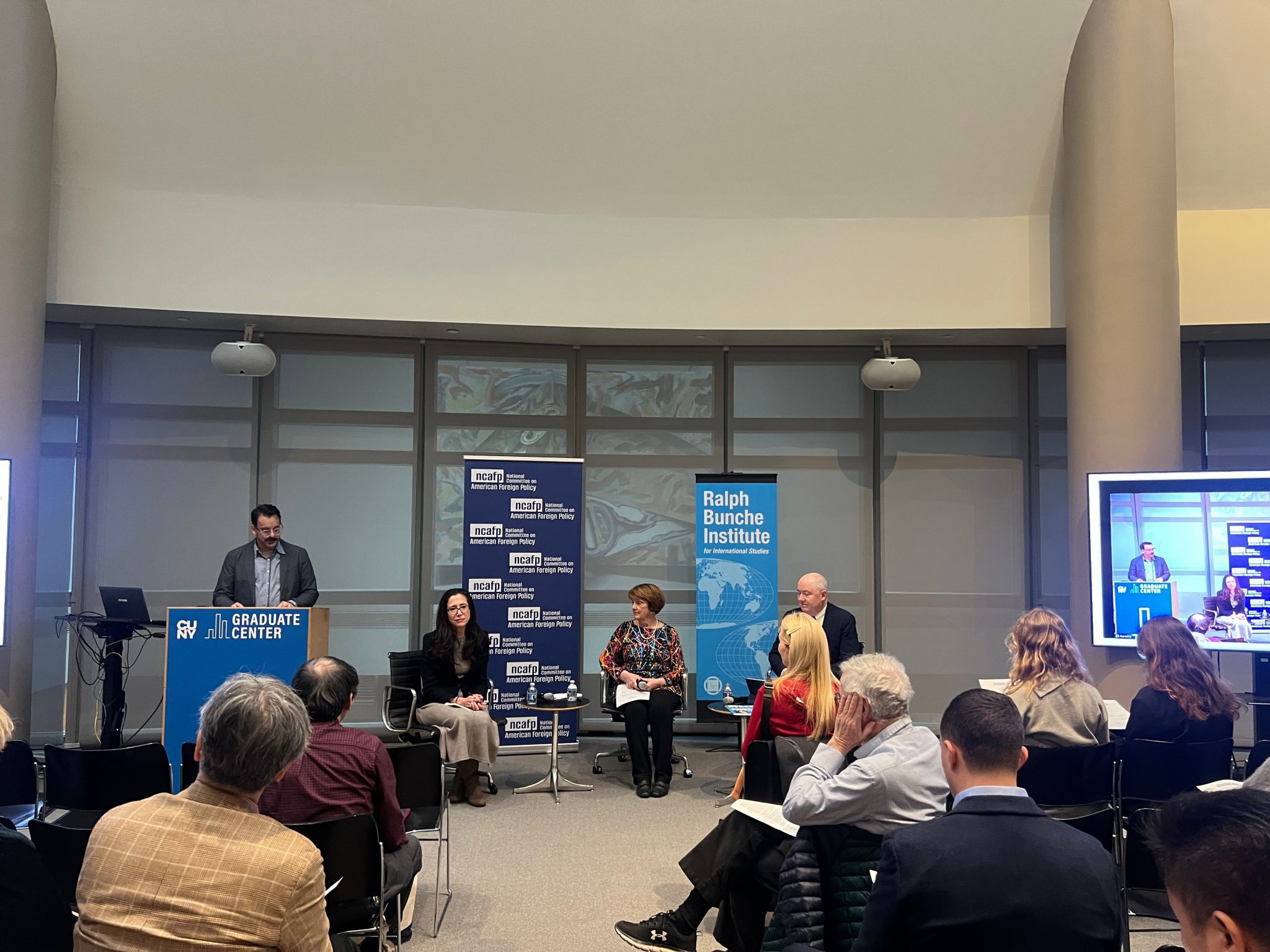
Dr. Karetny introducing the panel of speakers.
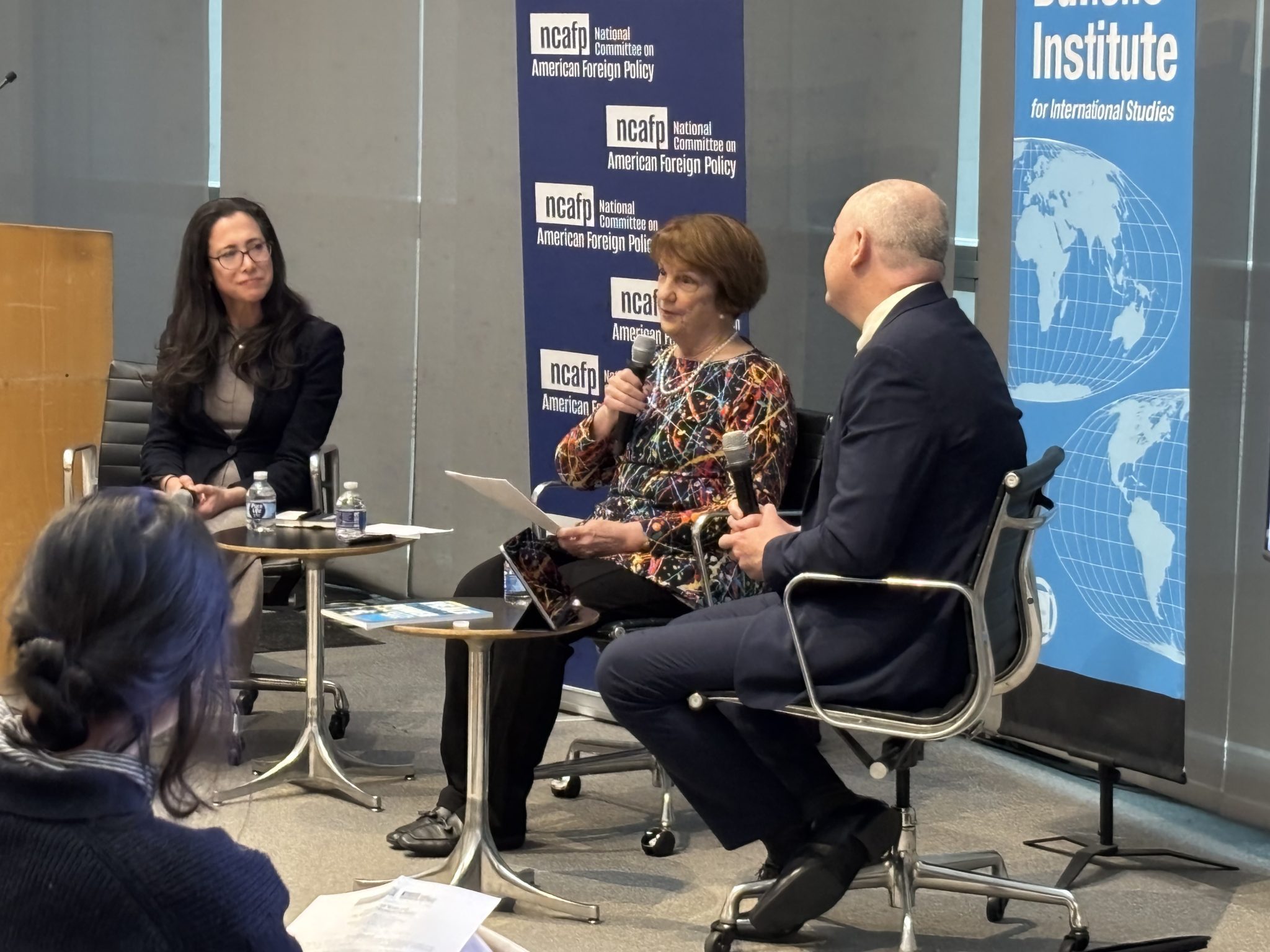
Hon. Stewart, Amb. Elliott, and Dr. Haynes in discussion.
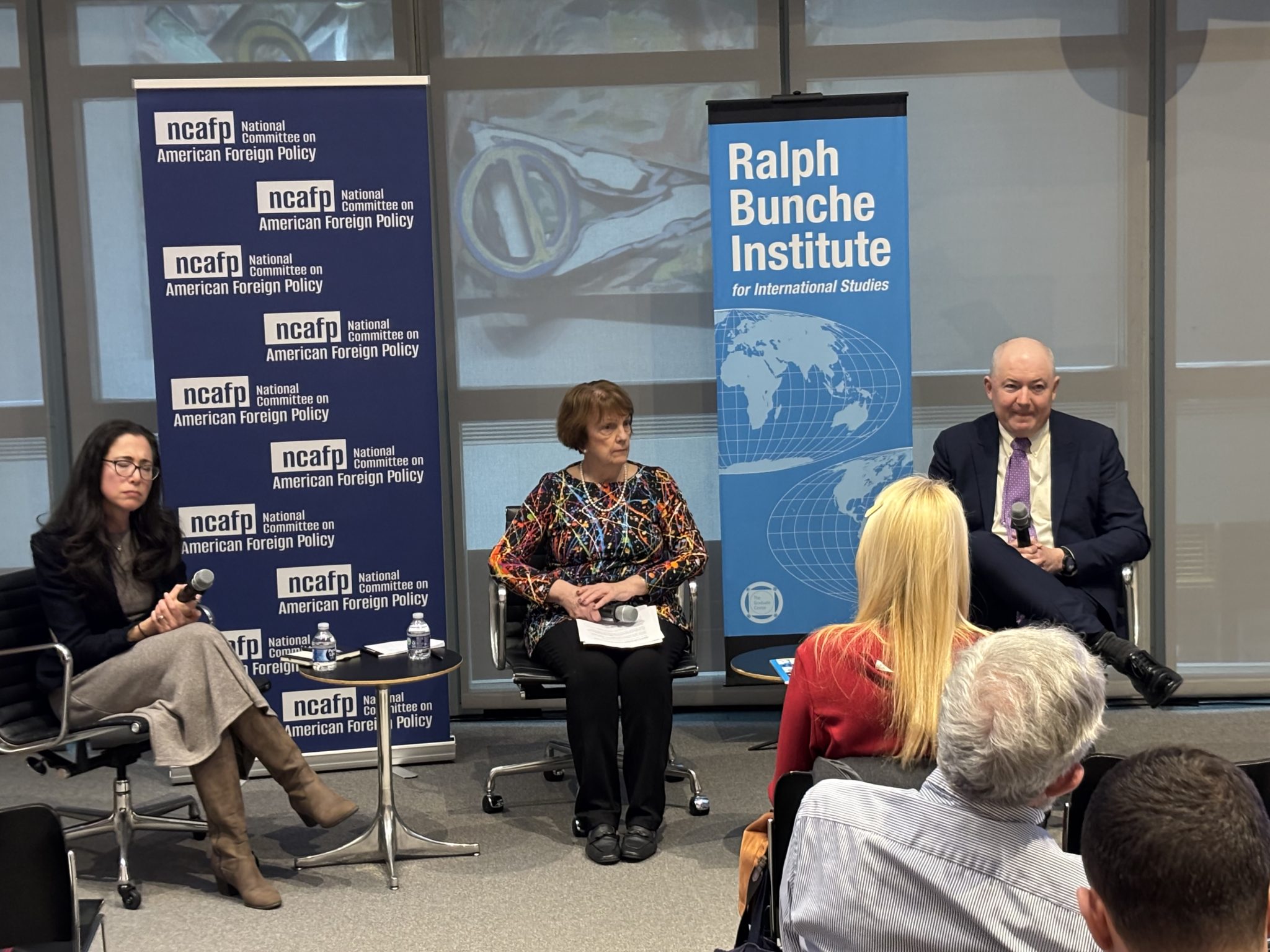
Dr. Haynes answering audience questions.
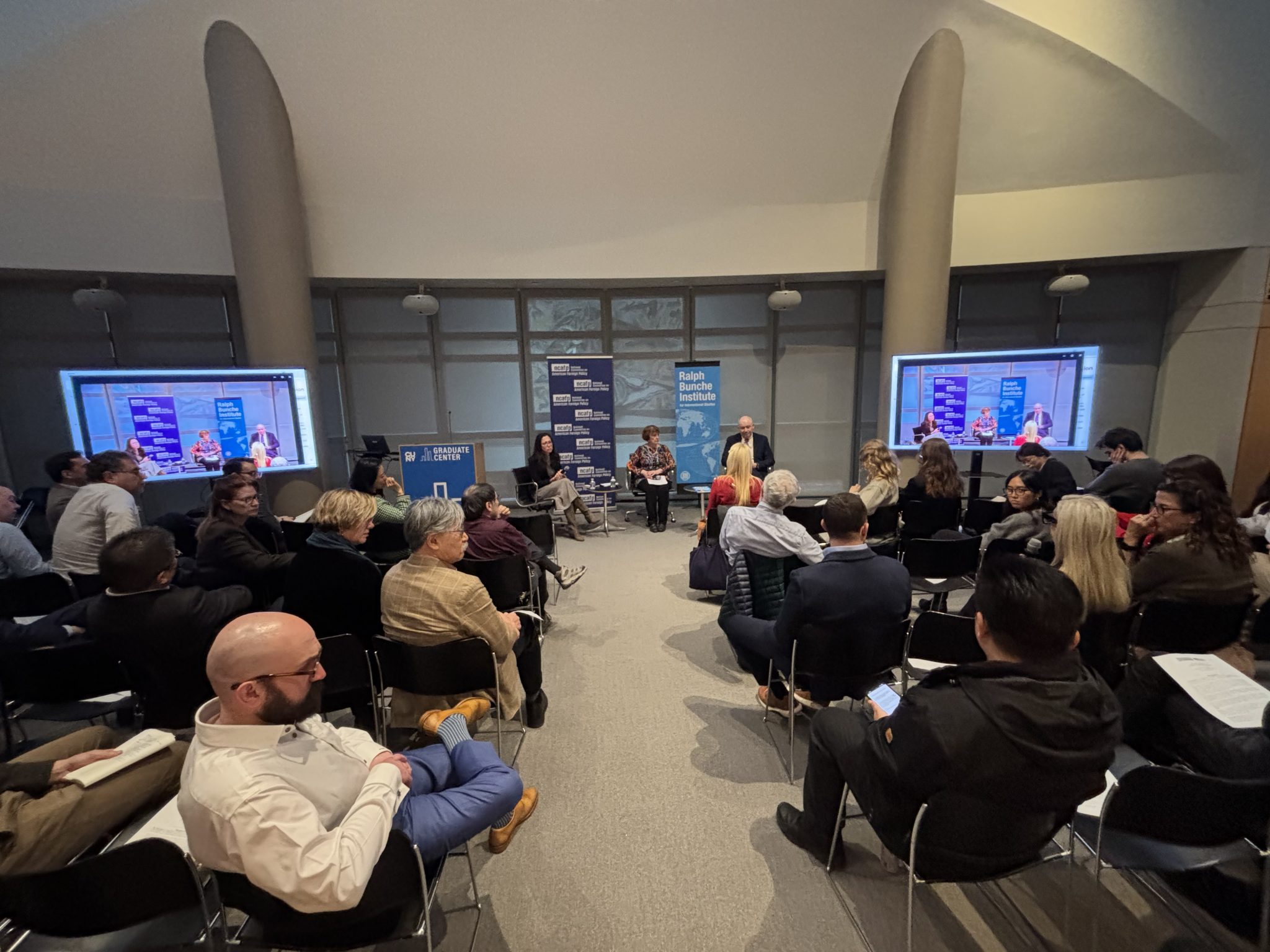
The panel answering audience questions.
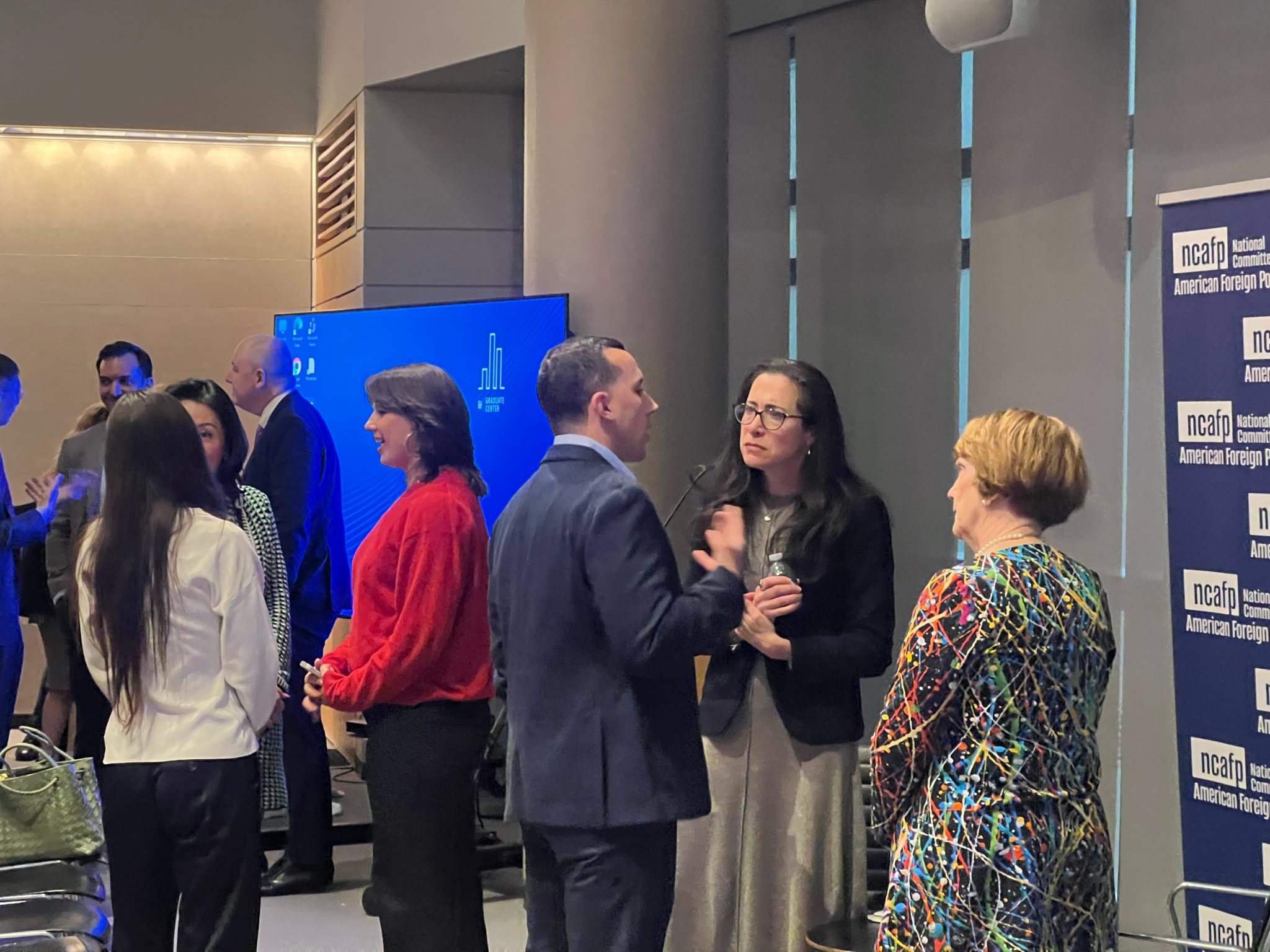
Networking reception after the program.
Featured Speakers:
The Honorable Mallory Stewart is the Chief Executive Officer of The Council on Strategic Risks, a nonprofit, non-partisan, security policy institute in Washington, DC. Her areas of expertise include weapons of mass destruction and outer space law and policy, and risk management regarding strategic stability and emerging and disruptive technologies. From 2022 to 2025, she served as the Assistant Secretary for the Bureau of Arms Control, Deterrence, and Stability in the U.S. Department of State. She joined the bureau after serving as the Senior Director for Arms Control, Disarmament, and Nonproliferation at the National Security Council from January 2021. From 2015 to 2017, Ms. Stewart was Deputy Assistant Secretary of State for Emerging Security Challenges and Defense Policy in what was then called the Bureau of Arms Control, Verification and Compliance. Before her time in the Arms Control Bureau, Ms. Stewart served as an attorney adviser in the Department of State’s Office of the Legal Adviser. She joined the Legal Adviser’s Office in 2002, and in that role she worked on numerous legal issues related to nonproliferation, arms control, deterrence, and U.S. participation in international treaties. Ms. Stewart holds an A.B. from Harvard College and a J.D. from Stanford Law School.
Dr. Lukas Haynes is a visiting scholar at the Ralph Bunche Institute for International Studies at the CUNY Graduate Center. His research examines the intersection of philanthropic, political, and mission-related investments to protect democratic institutions and national security. For two decades in philanthropy, Haynes shaped strategies at the David Rockefeller Fund, the John D. and Catherine T. MacArthur Foundation, and the Mertz Gilmore Foundation to advance national security, democracy protection, and climate change mitigation.
Haynes is the recent author of Peace Through Power: FDR’s Military Leaders and the Pragmatism of the UN Charter (Foreign Policy Association, 2025), which analyzes how U.S. military leaders sought to preserve Great Power peace by shaping the UN Charter’s provisions on collective security, the use of force and the veto.
From 2000-01, Haynes served on the Policy Planning Staff of the U.S. Department of State as a speechwriter for Secretary of State Madeleine Albright. Haynes has been a visiting Fellow at Stanford’s Center on Philanthropy and Civil Society and a Harvard University Kennedy School Fellow. He is a life member of the Council on Foreign Relations since 2000 and serves on the Advisory Board of the Center for Climate and Security.
Ambassador (ret.) Susan M. Elliott is the President and CEO of the National Committee on American Foreign Policy. She is also an accomplished diplomat, having served for 27 years in a variety of leadership positions at the U.S. Department of State.
Ambassador Elliott was the U.S. Ambassador to Tajikistan from 2012 to 2015. Prior to her appointment, she served as the Deputy Assistant Secretary of State, Bureau of South and Central Asian Affairs. Her previous overseas assignments include Minister Counselor for Political Affairs in Moscow; Principal Officer in Belfast, Northern Ireland; Deputy Economic Counselor and Visa Section Chief in Athens, Greece. Among many other assignments. Prior to leaving the State Department, Ambassador Elliott served as the Civilian Deputy and Foreign Policy Advisor to the Commander of the United States European Command. She also holds a PhD from Indiana University.
Mr. Robert Mugno is the Spring 2026 NCAFP Policy Intern. He is currently a student of History and Political Science at Columbia University.