EVENT RECAP: U.S. Policy in the Middle East
U.S. Policy in the Middle East with Ambassador Barbara Leaf
June 3, 2026
With Barbara Leaf
Moderated by Susan Elliott
On Wednesday, June 3, the National Committee on American Foreign Policy welcomed members, Trustees, and colleagues to an invitation-only fireside chat with Ambassador Barbara Leaf at New York City’s Cosmopolitan Club. The conversation, moderated by NCAFP’s President and CEO, Ambassador Susan Elliott, offered an overview of existing diplomatic channels and the possible outlook for short-term and lasting stability in the Middle East.
Ambassador Leaf delivered salient remarks on U.S.-Middle East relations and how they are reshaping and defining America’s future diplomatic tactics and international engagement. Focusing on the Iran War starting in February 2026, the U.S. and Israel-led military strikes have shifted regional dynamics, which have also transformed Iran’s regime and leadership. Since the initial assaults, there had been sustained engagement, moments of ceasefire, and then promises of renewed negotiations.
Helping identify several chokepoints, Ambassador Leaf explained that overreliance on third parties to settle the details of an agreeable framework has delayed efforts. Iran has territorial leverage in potential negotiations, including the possibility of reopening the Strait of Hormuz. However, without extensive diplomatic influence in the region, Tehran’s bargaining relies on keeping the Strait closed, creating global supply shortages, and employing drone attacks on neighboring Gulf States. The lack of face-to-face diplomacy between Washington and Tehran, even when their best interests lie in securing a permanent pause in kinetic engagement against each other’s assets, has strained relations and led to poor calculations for both.
Ambassador Leaf emphasized that Iran’s uranium enrichment program is a critical part of the long-term agreement, but not an urgent matter for initiating or halting negotiations. It would be wiser to address Iran’s nuclear capabilities using political tools unique to the State Department rather than relying solely on military options.
During the moderated discussion, Ambassador Elliott asked Ambassador Leaf about the most pragmatic steps to restore stability between Washington and Tehran. In her response, she said that applying the right multilateral pressure on Iran would better sustain any new deal on the table, and she concluded that more political solutions should be explored.
This program concluded with audience questions about the effects of prolonged economic sanctions, energy supply chains, Israel-Lebanon engagement, and the prospects for best- and worst-case scenarios. A networking reception followed the event.
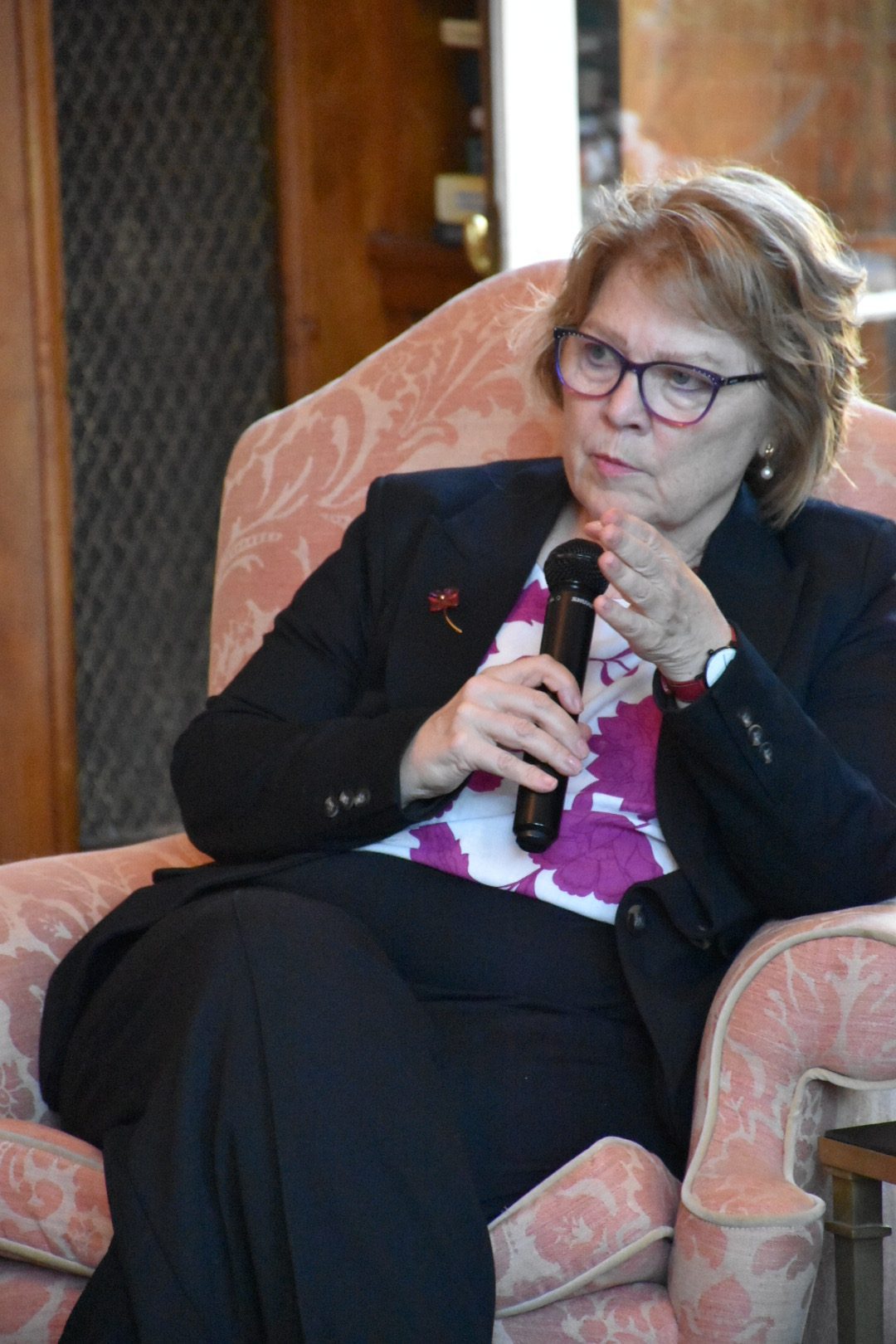
Amb Leaf participating in the NCAFP program
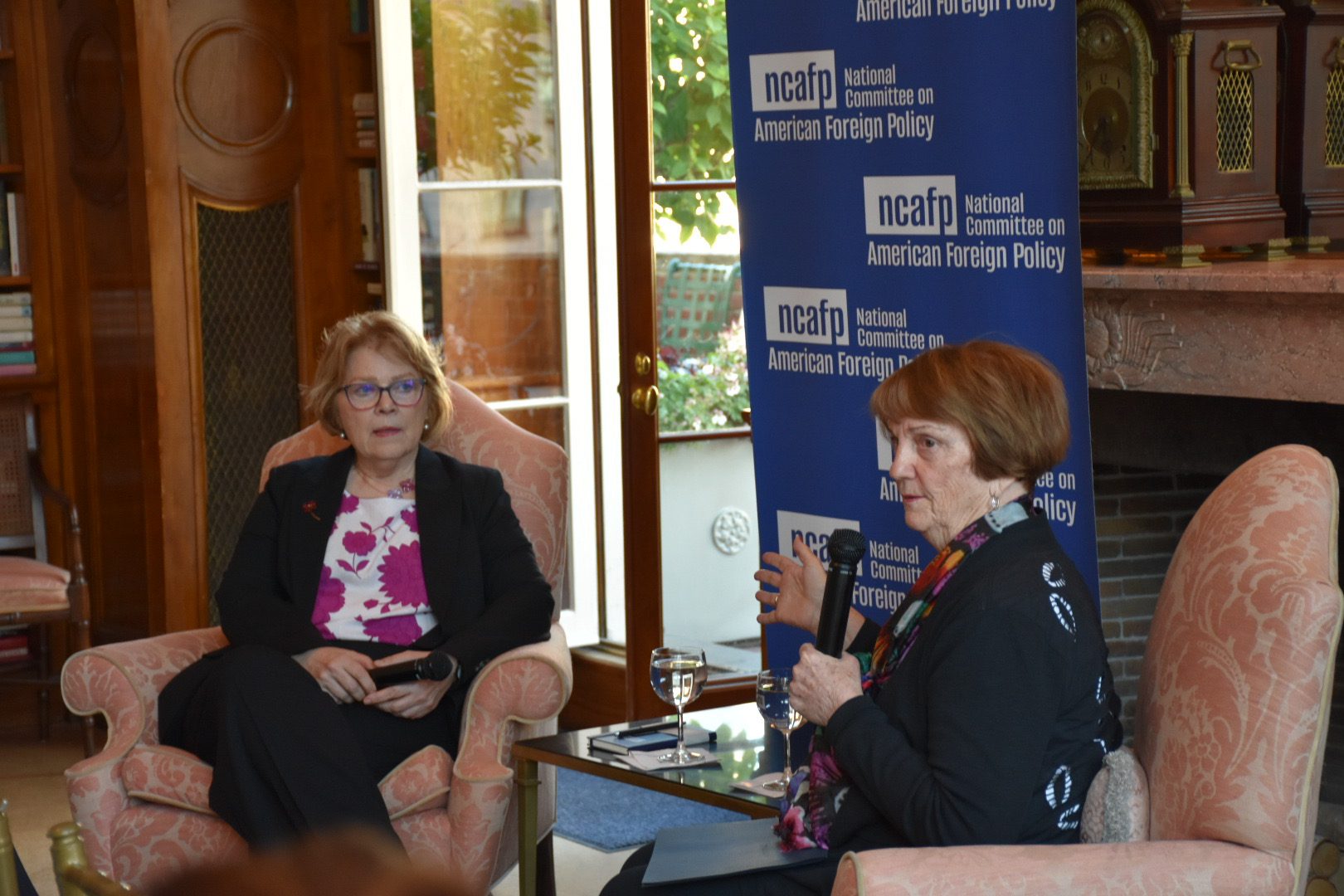
Amb Leaf and Amb Elliott in a moderated discussion
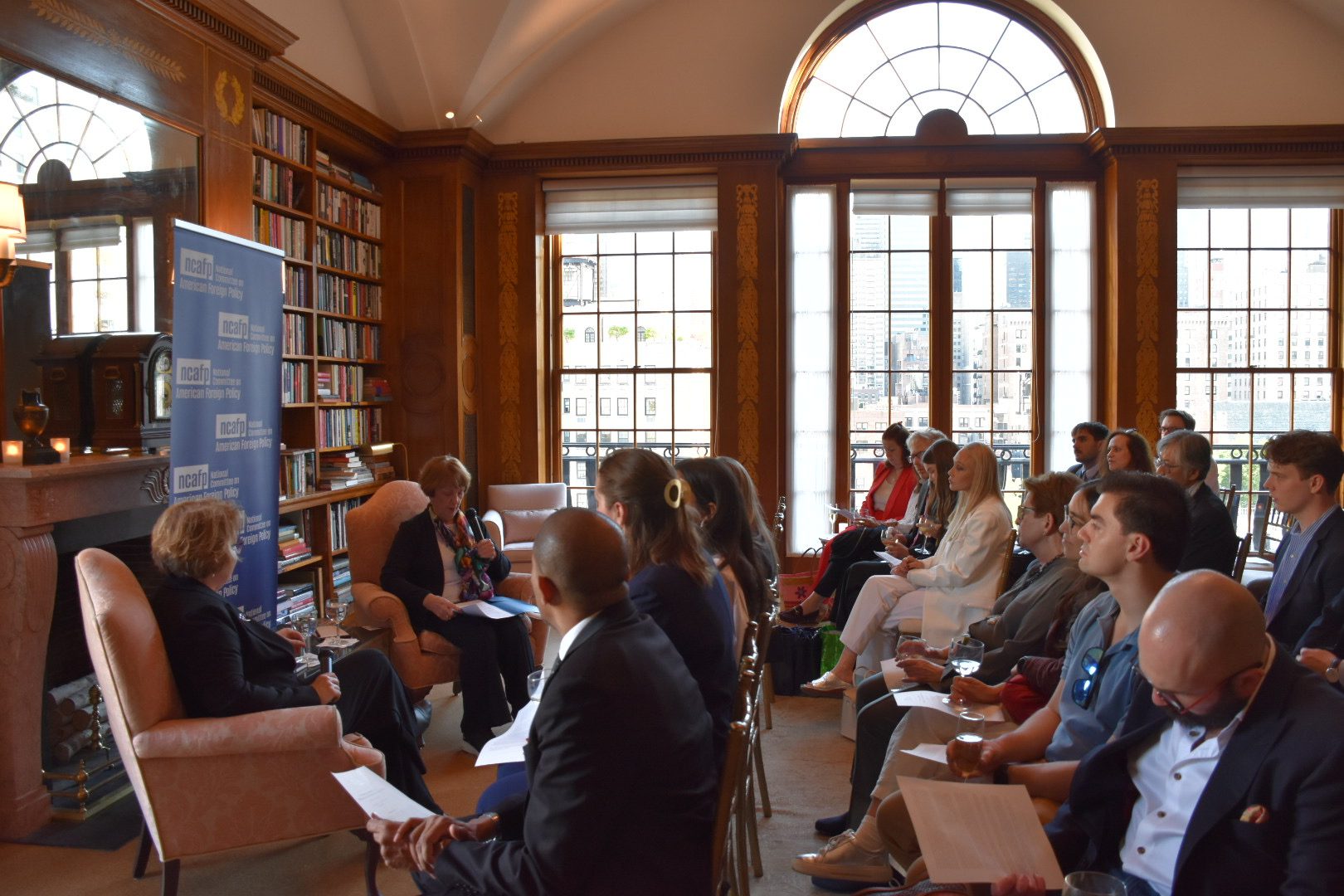
Moderated conversation on June 3 2026

Amb Elliott greeting guests as they arrive
Featured Speaker
Ambassador Barbara Leaf
Ambassador Barbara Leaf served as Assistant Secretary of State for Near Eastern Affairs, developing and implementing policies and programs for 18 countries from Morocco to the Arabian Peninsula. During her tenure, she bolstered collaboration among U.S. government agencies, Middle Eastern governments, and their private sectors to deepen business-to-business ties and expand bilateral trade. Ambassador Leaf served from 2014-2018 as U.S. Ambassador to the United Arab Emirates, where she oversaw more than 900 personnel and 43 federal agencies and offices in a bilateral diplomatic mission focused on expanding bilateral trade and economic ties, defense and security affairs, among other priorities. As Deputy Assistant Secretary of State for Iraq from 2011-2013, Ambassador Leaf oversaw the transformation of U.S. Mission Iraq to a civilian-led enterprise, and became the first Director of the Department of State’s Office of Iranian Affairs in 2006, formulating policies to contend with threats emanating from Iran’s nuclear and regional activities. Ambassador Barbara Leaf is a Senior International Policy Advisor at Arnold & Porter in Washington, D.C.
Ambassador (ret.) Susan M. Elliott is the President and CEO of the National Committee on American Foreign Policy. She is also an accomplished diplomat, having served for 27 years in a variety of leadership positions at the U.S. Department of State. Ambassador Elliott was the U.S. Ambassador to Tajikistan from 2012 to 2015. Prior to her appointment, she served as the Deputy Assistant Secretary of State, Bureau of South and Central Asian Affairs. Her previous overseas assignments include Minister Counselor for Political Affairs in Moscow; Principal Officer in Belfast, Northern Ireland; Deputy Economic Counselor and Visa Section Chief in Athens, Greece. Among many other assignments.
Prior to leaving the State Department, Ambassador Elliott served as the Civilian Deputy and Foreign Policy Advisor to the Commander of the United States European Command. She also holds a PhD from Indiana University.