
REPORT: Conflict Prevention in the Taiwan Strait: Restraint, Discipline and Dialogue
By Susan A. Thornton and Emily SparkmanJuly 2025 In June 2025, the National Committee on American Foreign Policy (NCAFP) convened its annual Cross-Taiwan Strait Track II Dialogue in New York City, bringing together a select group of authoritative participants from all sides. This closed-door discussion focused on the increasingly tense dynamics shaping cross-Strait relations, with particular attention to the growing drivers of the security dilemma, diverging threat perceptions, and the erosion of mutual trust. Participants explored both short- and medium-term outlooks for peace and stability, assessed the effectiveness of deterrence strategies, and offered…
- Reports
REPORT: Unlocking Cooperation: A Path to Regional Stability in Asia
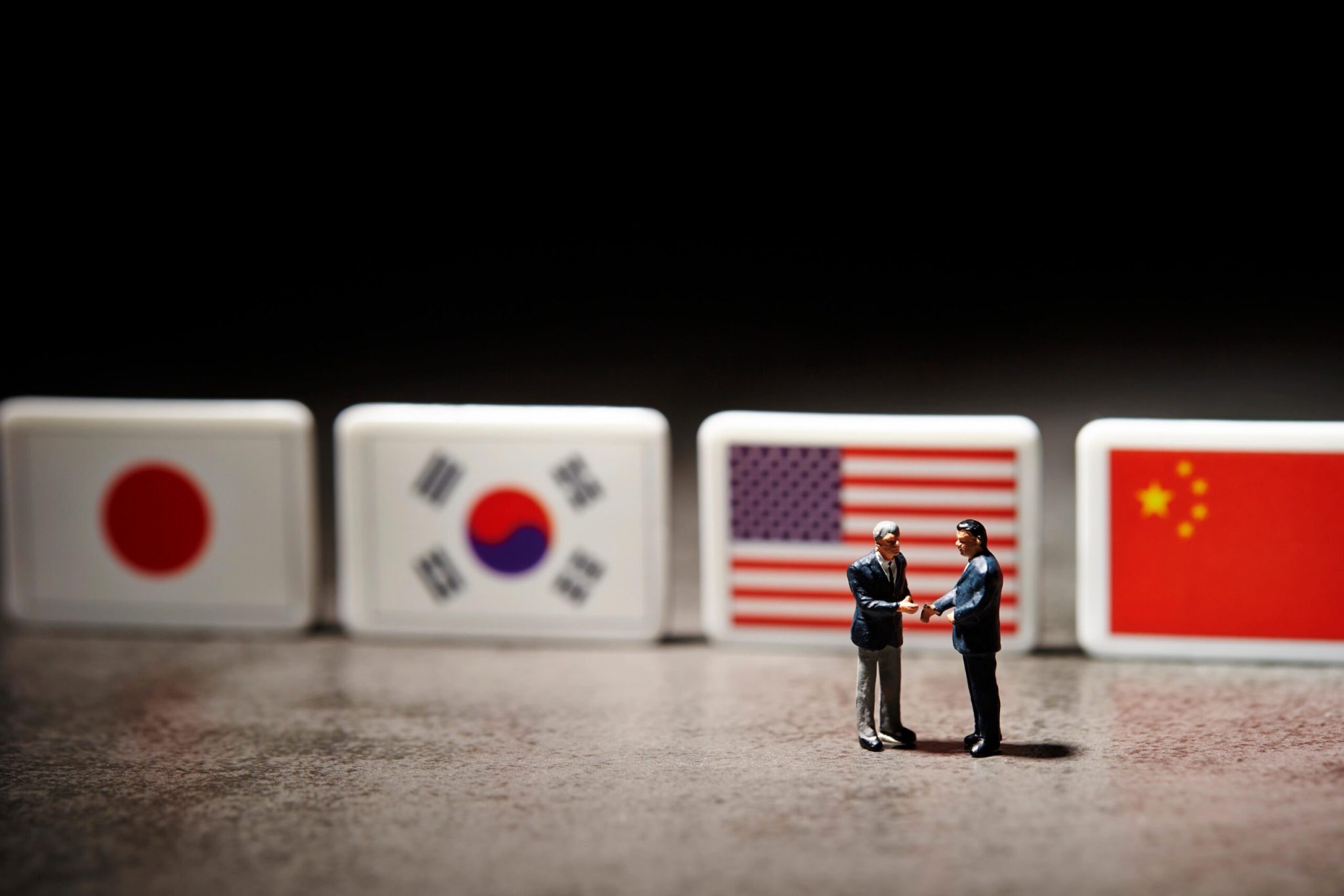
By Susan A. Thornton and Emily SparkmanJuly 2025 The National Committee on American Foreign Policy’s Forum on Asia Pacific Security recently convened experts from the People’s Republic of China (PRC), Japan, the Republic of Korea (ROK), and the U.S. against a complex geopolitical backdrop for a closed-door trilateral (U.S., Japan, ROK) and four-party Track II conference. In keeping with our focus on conflict prevention, discussions focused on fostering regional security cooperation and negotiations to defuse tensions and build confidence among regional players. Despite substantial challenges to regional stability and cooperation, participants recognized the…
- Reports

REPORT: U.S.-China in 2025: Cutting Through Uncertainty
Hogogo/Getty Images By Susan A. ThorntonJune 2025 In early May, the NCAFP convened policy experts and former officials from the U.S. and China in New York City for its annual Northeast Asia Security Track II Conference. Participants discussed the strategic direction of the U.S.-China relationship as well as actions to build more constructive relations, mitigate the current zero-sum competition, and avert deepening adversity to reduce the likelihood of crisis. The NCAFP recommends the following: The U.S. should clearly articulate its China policy at the…
- Reports

REPORT: U.S.-Japan Relations in Trump 2.0: Gilt or Golden?
U.S.-Japan Relations in Trump 2.0: Gilt or Golden? By Susan A. Thornton May 2025 During a recent U.S.-Japan bilateral Track II conference in New York, the NCAFP invited experts, scholars, and practitioners from the U.S. and Japan to discuss and analyze the challenges and opportunities presented by major changes in U.S. foreign policy under the second Trump administration. The NCAFP recommends the following: Rhetoric about a “New Golden Age” in U.S.-Japan relations exaggerates expectations and could be counterproductive if overplayed. There is a need to demonstrate the value proposition of the alliance in both countries. In this regard, the two…
- Reports

REPORT: 2025 Northern Ireland Emerging Leaders
May 2025 The National Committee on American Foreign Policy is pleased to release the Northern Ireland Emerging Leaders 2025 report. Over the past several months, the NCAFP convened a diverse and dynamic group of emerging leaders, scholars, and policy practitioners from across Northern Ireland. Through a series of in-depth discussions, participants examined the most pressing issues facing the region today, ranging from healthcare and education to gender equality and the arts. The result is a forward-looking report that offers innovative policy proposals and actionable recommendations. It reflects…
- Reports

REPORT: Preparing for Trump 2.0
Preparing For Trump 2.0: Seeking Opportunities and Aligning Expectations in the Asia-Pacific By Susan A. Thornton and Emily Sparkman January 2025 The NCAFP’s Forum on Asia Pacific Security (FAPS) organized a high-level delegation of experts and former U.S. government officials to visit Beijing, Shanghai, Taipei, Tokyo, and Seoul for in-depth meetings with officials and other counterparts in December 2024. The NCAFP presents the following policy recommendations and conclusions: Regional leaders hoped the incoming U.S. administration would continue strengthening alliances, maintain open channels of communication to avoid misunderstandings, and not turn away from global leadership. They believed there could…
- Reports

REPORT: Whither Ambiguity? Next-Generation Perspectives on Cross-Taiwan Strait Relations
Whither Ambiguity? Next-Generation Perspectives on Cross-Taiwan Strait Relations By Juliet Lee and Nia WilliamsJanuary 2025 In the second half of 2024, the National Committee on American Foreign Policy (NCAFP) convened a second cross-Strait next-generation working group with young scholars and experts from the United States, Mainland China, and Taiwan to highlight new voices on the longstanding and sensitive issue of cross-Taiwan Strait relations. Throughout this series of dialogues, participants shared their assessments of the current situation and their recommendations to manage relations. A few…
- Reports

REPORT: 2024 Northern Ireland Emerging Leaders
Northern Ireland Emerging Leaders: Advancing Peace through Policy November 25, 2024 Northern Ireland’s path to prosperity hinges on more than just the absence of open conflict—it requires political stability, economic growth, and a strong commitment to human rights and reconciliation. The restoration of the power-sharing executive in January 2024, along with Sinn Féin's rise and the UK’s new Labour government, presents both challenges and opportunities for Northern Ireland. It also offers a chance to strengthen British-Irish and transatlantic relations, with lasting implications for the region and the world.
- Edited Volumes
- Reports
REPORT: Six Parties Minus One:Grappling with Security Tensions
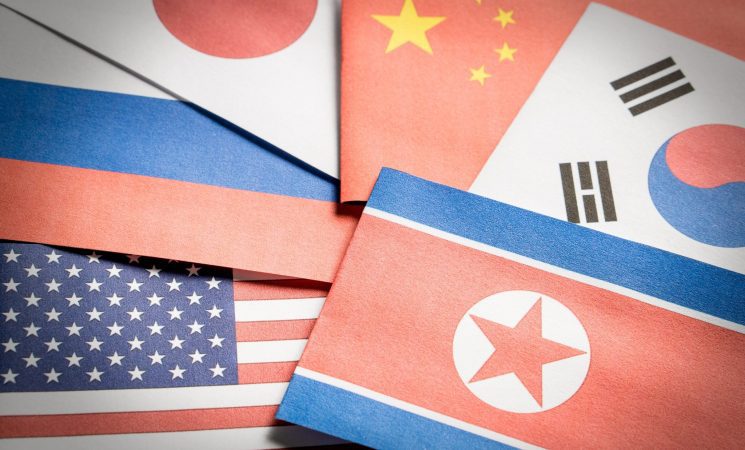
Six Parties Minus One: Grappling with Security Tensions On and Around the Korean Peninsula By Susan A. Thornton and Nia WilliamsJuly 2024 In May 2024, the National Committee on American Foreign Policy (NCAFP) hosted a 5-Party discussion, convening experts from the People’s Republic of China, Japan, the Republic of Korea (ROK), Russia, and the U.S, five out of the six countries involved in past North Korea nuclear negotiations. Participants acknowledged that all parties face momentous obstacles to cooperation and achieving stability in the region, but endeavored to explore and propose creative approaches…
- Reports